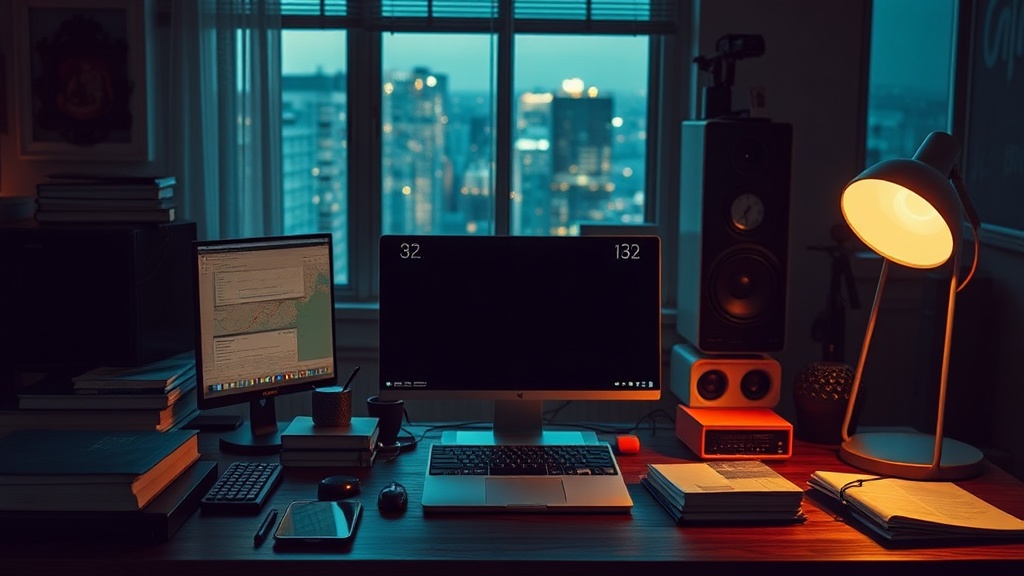
Why Your Current Study Setup Might Be Killing Your Focus

The Myth of the Perfect Study Environment
Most students think that a quiet room and a clean desk are the only things they need to stay on task. They believe that if they can just find that one perfect, silent corner of the library, the information will naturally stick. This is a mistake. A quiet room isn't enough if your internal environment—your mental state and digital habits—is a chaotic mess. This post looks at why your physical space isn't the problem, but rather how you interact with your surroundings and your devices during deep work sessions.
The reality is that focus isn't about finding stillness; it's about managing distractions before they even reach your consciousness. If you're constantly checking your phone because you're bored, a silent library won't save you. You need to build systems that protect your attention from the start.
Can You Actually Study with Music?
A common debate in dorm rooms everywhere is whether music helps or hurts. The truth is that it depends entirely on the type of sound. If you're listening to a podcast or a song with heavy lyrics, you're splitting your cognitive resources. Your brain is trying to process language while you're trying to read, which leads to a phenomenon called cognitive load. It's a heavy tax on your working memory.
Research suggests that certain types of auditory stimulation can actually help maintain focus, provided they aren't distracting. Consider these options:
- Ambient Noise: Sounds like white noise or pink noise can drown out erratic background sounds (like a distant conversation) without demanding your attention.
- Lo-fi or Instrumental Beats: These provide a consistent rhythm that can help you enter a flow state without the distraction of lyrics.
- Nature Sounds: The sound of rain or a forest can be incredibly grounding for those who find total silence unnerving.
If you find yourself rereading the same sentence five times, your music is likely the culprit. Try switching to something without a melody or a beat to see if your comprehension improves.
How to Build a Better Digital Workspace
Your laptop is a gateway to every distraction ever invented. You can't just hope you'll resist the urge to open a new tab. You have to make it difficult to fail. If your desktop is a graveyard of open tabs and unorganized files, your brain is constantly processing that visual clutter, even if you aren't looking directly at it.
To build a better digital workflow, try these steps:
- The One-Tab Rule: Only keep the tabs open that are directly related to the task at hand. If you're researching for a history paper, close the YouTube tab.
- Full-Screen Mode: Use the full-screen function on your browser or document editor. This hides the taskbar and any notifications that might pop up.
- Notification Silencing: Use "Do Not Disturb" modes. Even a vibration in your pocket can break your concentration for several minutes.